
Summit 2026 · Re-echoedPart two of two
Three Things We Can’t Unhear
Four faces went up on the screen at the Builders’ Summit and the room could name only one — while sitting inside their work all evening. A re-echo of the opening night message.
Four faces went up on the screen. No names. Just question marks.
The room struggled.
The way the night opened
Four faces. Can you name them?
This is the slide the room was shown. Try it before you read on — tap a face to give up on it.
Three of these four are in your daily life and out of your memory. The light over your head. The vehicle outside. The phone in your hand — which you may well be holding right now, having just failed to name Martin Cooper.
Rizal came fast — of course he did. Edison needed a hint; the speaker had to point at the light bulb before the name landed. The other two, nobody had any idea at all. Not one guess from the entire room.
Karl Benz, who built the first automobile. Martin Cooper, who made the first mobile phone call.
Then the quiet arrived on its own.
Because we couldn’t name them — and we had been sitting inside their work the whole evening. The light over our heads. The vehicles parked outside. The phone in every hand in that room. Some of us were holding Martin Cooper’s invention at the exact moment we failed to recognise Martin Cooper.
Three of those men are in your daily life and out of your memory. The fourth is in your memory because of what he was willing to lose for it — Rizal wrote a nation into being and was shot for writing it.
Either way, the thing outlasted the man.
That was the question the night opened with, and it never let go: what part of you will still be in the room after you have left it?
The man who was there before there was anything
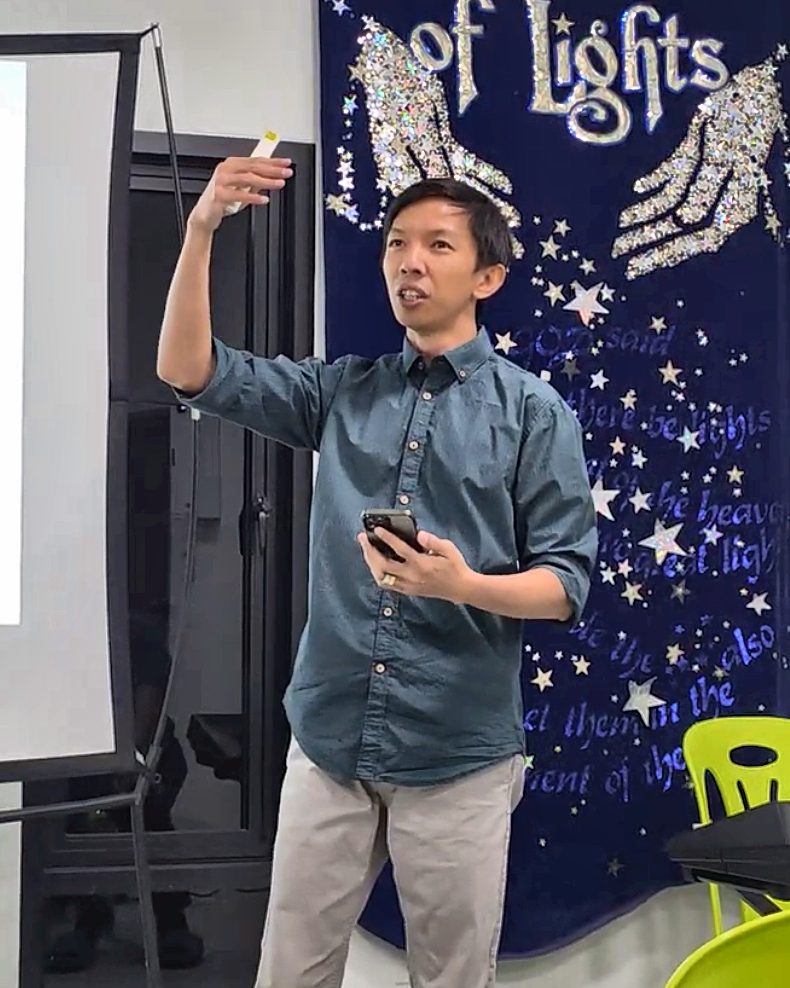
He wasn’t introduced as a guest speaker. He was introduced as a friend — a support partner from back when the care group was first being initiated, when there was no summit, no stage, no banner, nothing to put a name on.
So the first voice at the Builders Summit belonged to someone who had been present before there was anything to be present at. That wasn’t on a slide. It set the tone anyway.
Ptr. Edwin Joseph “Jeff” Villagomez is an ordained pastor with Harvest Field International and AMO Global, and director of the Asian Institute for Mission. We had just come out of praise and worship. The room was warm, loose, awake — the particular kind of ready that expects to be encouraged.
We were encouraged. We were also, by the end, cornered. In the good way.
Legacy is not what you leave. It’s what you build.
He put the ordinary definition up first. Legacy: material possessions passed on from one person who has died to another. Ideas, values and cultures handed down from predecessors and civilisations.
Then he moved it.
The word carrying the weight there is intentional.
Legacy in the first definition is something that happens to you once you’ve stopped. It’s an estate. It gets read out in a room you’re not in. Legacy in the second definition is something you are either doing today or not doing today.
One is a will. The other is a verb.
The four questions that changed the temperature
Then came a slide that was just questions, and the room’s energy shifted from warm to very still:
Notice what is not being asked.
Not what you have achieved. Not what you have built. Not what your title is, how many you lead, or what you’ve survived. Every single question is about what happens inside someone else because you exist.
Which means legacy, measured this way, isn’t measured in you at all.
He anchored it in Hebrews 11 — the chapter that is nothing but a list of builders. “Now faith is confidence in what we hope for and assurance about what we do not see. This is what the ancients were commended for.” And then, at the bottom of the whole list: “They were all commended for their faith.”
Not for the ark. Not for the walls. Not for the kingdom. For the faith underneath the thing they built.
Then the question that split the message open: how will you create a legacy that impacts the generations ahead?
He gave three answers. These are the three we can’t unhear.
One: People must be inspired by your faith
Here’s the difficulty built into that sentence. Hebrews just defined faith as assurance about what we do not see — so by definition, nobody can see the thing you’re trusting.
What they can see is you. Acting like it’s already real.
That’s the whole transfer. Nobody is inspired by your theology. They’re inspired by watching you make a costly decision without the guarantee in your hand, and then watching you sleep fine afterward. A person who sees that once remembers it longer than any sermon they have sat through.
You have to be caught believing something before it works out. In public. Where it can still go wrong.
Two: People must be inspired by your obedience
This is the one the room actually felt.
Inspiration is cheap and we all know it. Obedience is auditable. It has a date on it. It is faith with a timestamp — the moment the invisible thing you claimed to believe became a visible thing you actually did.
Noah’s faith was invisible. The ark was not. Nobody in that generation was moved by what Noah thought. They were moved, and then eventually convicted, by a boat going up in a place with no water.
You cannot be selectively obedient and generationally influential. The people closest to you are already keeping score, and they are not scoring your intentions.
Three: People must be inspired by your sense of purpose and direction
A person who knows where they’re going changes the posture of everyone standing near them. People lean toward direction. They organise themselves around it without being asked.
And the reverse is just as true, which is the uncomfortable part. Drift is contagious too. A leader with no direction doesn’t produce a neutral room — he produces a room full of people quietly deciding this isn’t going anywhere.
You don’t have to have arrived. Nobody in Hebrews 11 arrived; the text says so plainly. You have to be visibly going somewhere.
You have to choose, be seen choosing, and keep choosing when it’s slow and unglamorous and nobody is clapping.
Then he drew the circles
Three lines, in this order:
Your legacy starts within your family.
Your legacy influences those people surrounding you.
Your legacy leads people to their eternal promise.
Sit with the order for a second, because most of us would have started at B.
B is the platform. The crowd, the team, the ministry, the following, the people who see the edited version. That’s where we want legacy to begin, because that’s where it’s flattering.
He started at A. The people who see us with the lights off. The ones who were there for the worst Tuesday. The hardest audience you will ever have is the one that already knows what you’re like when you’re tired.
And C reframes the entire thing. Influence that stops at admiration is just reputation with a longer shelf life. The circle is only finished when it points past you.
The last slide
He didn’t build toward it. It just arrived, and then it stayed.
You are a BUILDER,
you are destined to impact the world.
Read it again slowly, because the grammar is doing something.
Not you could be. Not you should become one. Not one day, if you’re faithful.
You are.
Which means the sentence isn’t an invitation to start. It’s a notice that you already started — that influence has been leaving your life in every direction for years whether you authorised it or not, and the only genuinely open question is what you’re building with it.
We walked into that room excited.
We walked out of it assigned.
If a face came to mind while you were reading this — someone in your house, your circle, your team, who is already being shaped by what you do whether you meant it or not — that’s not a coincidence. That’s the message.
Send this to them. Or better: go build the thing they’ll still be standing in long after you’re gone.
You are a BUILDER,
you are destined to impact the world.